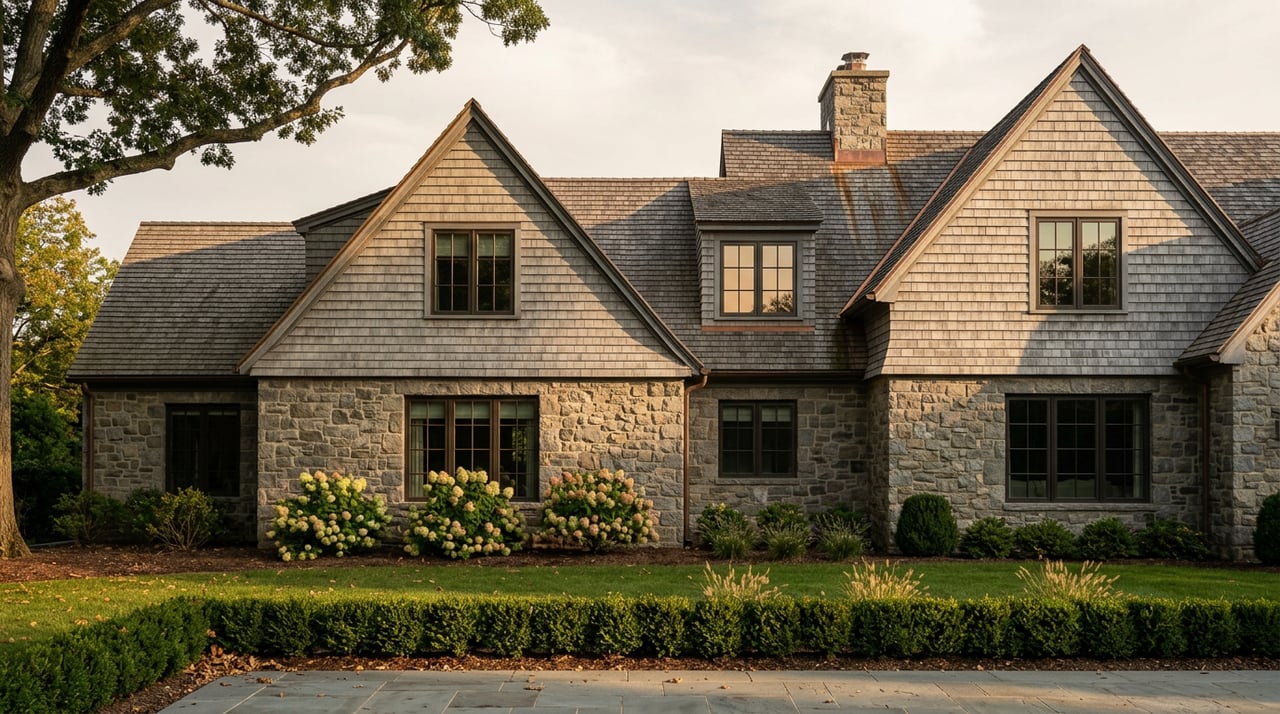
In 2021, Rene and Gus Wonais bought a Clay Street house that, like many older Hinsdale homes, had been marketed as a teardown possibility. They had no interest in demolishing it. This past spring, the couple asked the village for a preservation subsidy to help replace the windows in its enclosed front porch, and the village's Historic Preservation Commission recommended approval. That modest transaction points to a bigger shift most sellers haven't caught up to yet: the village's own zoning rules now make a case for keeping an old Hinsdale house that goes well past sentiment. According to The Hinsdalean, under the right conditions, the addition a preserved home is allowed to build can be larger than the new house a teardown would permit on the same lot.
That reversal, not the well-worn story about McMansions replacing Queen Annes, is the detail that should change how a seller in an older Hinsdale home decides to market a property this year.
The Instinct That's Usually Right, Until It Isn't
The teardown logic in Hinsdale exists for a reason. Since the 1990s, the village has lost roughly half its original housing stock to demolition, according to Jim Prisby, a member of the village's historic preservation commission, who has said the annual teardown count often topped 100 homes a year at its peak. In the Robbins Park Historic District specifically, which earned National Register status in 2008 when 65 percent of its 475 homes were considered historically significant or contributing, the Hinsdalean has reported that around 30 of those homes have since been lost to demolition.
For most of that period, the village's only real tool was persuasion. The Village of Hinsdale's 2000 Historic Preservation Ordinance created a commission with authority to review demolitions in designated districts, but that review has always been advisory. Patch reported that a homeowner who wants to demolish a code-compliant structure can do so regardless of what the commission recommends. Multiple public hearings over the past three years have made that limit explicit, sometimes bluntly, when commissioners have objected to a design and been reminded that their vote carries no legal weight.
What changed is not the commission's authority. It's the incentive underneath it.
The Zoning Trade Worth Knowing
The Village of Hinsdale established a Historic Overlay District in 2022. The Hinsdalean reported that the village began adding properties to a Historically Significant Structures Property List in March 2023. A home doesn't need to be a landmark to qualify. It needs to meet just one of six criteria, most tied to architectural distinction or a connection to a significant person or event in village history.
Being on it unlocks something more useful than a plaque. Trustee Alexis Braden, who previously served on the preservation commission and now leads the Hinsdale Historical Society, put the mechanism plainly earlier this year: the alternative zoning available to listed properties means an owner can build bigger on the lot than a teardown would allow. The Village of Hinsdale says floor area ratio limits, height caps, setback requirements and lot coverage rules that bind new construction can all be relaxed for an addition to a listed historic home. Braden noted the appeal for younger families who need more space but don't want to lose the house.
Here is what that trade actually looks like when the two paths are set side by side.
| Constraint | New Construction (Teardown) | Addition to a Listed Historic Home |
|---|---|---|
| Floor area ratio | Standard village limit applies | Eligible for waiver |
| Building height | Standard limit applies | Eligible for waiver |
| Setbacks | Standard limit applies | Eligible for reduction |
| Lot coverage | Standard limit applies | Eligible for increase |
A teardown still has to fit the same envelope every other new house in the neighborhood fits. A preservation-listed addition doesn't. That is another factor to weigh when considering a property as a teardown.
What the Incentives Actually Pay For
The dollar amounts attached to individual projects are modest on their own. The Wonais' window subsidy, mentioned above, was for about $9,000. In the same batch of requests, a family on Washington Street rebuilding a 1990s addition in a style consistent with their home's Tudor Revival roots sought roughly $10,000, with the commission recommending approval there too. A family updating and adding onto their 1875 gabled-ell house already benefited from waived permit fees and expedited processing, and plan to seek a $6,000 tax rebate over five years plus a matching grant once the project wraps up. The Frank Lloyd Wright-designed house on County Line Road that residents once feared would be demolished is now moving forward with a $373,000 renovation, with trustees signaling support for roughly $13,000 in incentives, and a separate Eighth Street project estimated at $662,000 is in line for close to $23,000.
None of those figures cover a project on their own. What they demonstrate, across a large enough sample, is a program that's working at scale. As of this past spring, the village board had approved close to $246,000 in fee waivers, $160,000 in matching grants, and $137,000 in property tax rebates through the program, figures that together have accompanied more than $12 million in new construction on historic properties. That figure describes construction activity, not demolition avoided, and does not establish that the program caused those projects.
Whether the incentive program is bending the overall teardown curve is still an open question. The village issued only 26 teardown permits in 2023, down from historical peaks, though the village's own community development director has cautioned it's too early to credit the program alone for that drop.
The Timing Mistake That Actually Costs Sellers
Here is the friction that matters most for anyone weighing a sale. Getting a property added to the Historically Significant Structures Property List takes about three months from application to Village Board approval. Salmon, who runs the program, has said her best advice for homeowners is to contact the village as early as possible, and that the strongest outcomes she has seen come from owners who start the conversation early, often while the home is already being prepared for market.
A house marketed from day one as a teardown draws a buyer pool that is thinking in land value and rebuild costs. That buyer may not evaluate the alternative zoning envelope if the listing does not raise it. If the same house could qualify for the list and hasn't been through that three-month process before it goes live, the seller has effectively pre-sorted the buyer pool toward demolition, whether or not that's the highest and best use of the lot.
Robbins Park properties carry an extra layer worth knowing about before listing. As The Hinsdalean reported, since April 2024 any proposal to demolish, relocate or significantly alter a residence in the district must first go through a preliminary meeting with an ad hoc Design Review Team before a formal Certificate of Appropriateness application. That team has 15 days to issue written recommendations and may require a capped $250 historic impact study. The village also raised its Robbins Park demolition fee from $7,928 to $11,100 that same year, in part to cover the added staff and consultant time. None of this stops a demolition. It does add weeks to a timeline a seller or buyer might be assuming is faster than it is.
Robbins Park Isn't The Whole Story
It's worth separating two things that get conflated in casual conversation about historic Hinsdale. In the Robbins Park Historic District, demolition triggers the design review team process described above. Being on the Historically Significant Structures Property List is a separate, village-specific program open to any qualifying home in the Historic Overlay District. The Clay Street and Washington Street examples above are modest houses, not grand estates, which is the point: the list and its zoning benefits aren't reserved for mansion-scale properties.
That distinction matters for a seller trying to figure out which category their house falls into, and it's exactly the kind of detail worth walking through with a local advisor before a sign goes in the yard, not after.
A Few Questions Sellers Actually Ask
Has Robbins Park continued to lose homes despite its National Register status? Robbins Park has carried that designation since 2008, and the village has continued to lose homes there, including the 156-year-old Whitney House on First Street, the first Hinsdale property ever placed on the National Register, which came down in 2025. The Register recognizes significance.
Can a home already listed for sale still apply to the program? Yes, and according to the village planner who administers it, a number of homes have gone through the process specifically while being marketed. It's simply better done before the listing goes live than after an offer is already on the table.
Is the tax rebate the main financial benefit? Usually not. The rebates in recent approvals can be useful but are rarely the deciding factor. The larger financial lever is the zoning flexibility itself, the ability to add square footage a teardown on the same lot legally could not.
If you own an older home in Hinsdale and are trying to decide whether to market it as a renovation opportunity or a teardown, that decision is worth making with real numbers in hand, not assumptions carried over from a neighbor's project a few years back. Colleen C. Wilcox works with Hinsdale sellers on exactly this kind of positioning question before a home ever goes on the market. Request a private market consultation to talk through what your specific property, and its zoning eligibility, actually supports.
This article is general information, not legal, tax or financial advice. Consult a qualified professional about your situation.