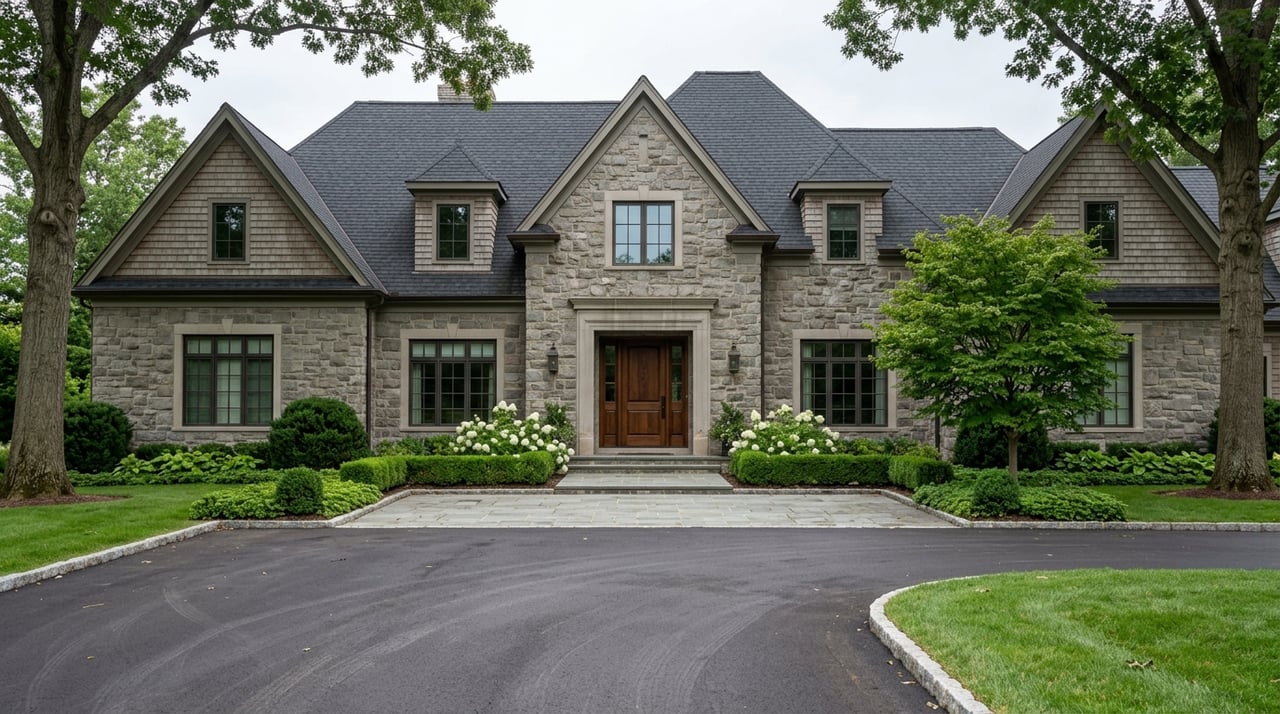
If you have spent any time looking at luxury homes in Hinsdale, you have probably noticed one thing right away: there is no single “Hinsdale style.” Instead, what makes this market so compelling is its range, from ornate Victorian-era homes to formal revival architecture and newer custom builds that respect the look and scale of the village. If you are buying, selling, or renovating in Hinsdale, understanding these styles can help you spot lasting value and make smarter decisions. Let’s dive in.
Why architecture matters in Hinsdale
Hinsdale reads like an architectural market because its identity was shaped early and then carefully carried forward. The village grew as a railroad suburb after the Chicago, Burlington & Quincy Railroad rerouted through the area in 1863, and William Robbins platted the village in 1865. Over time, Hinsdale attracted residents who built a broad mix of substantial homes, many of which still define the community today.
That history is still visible in places like the Downtown Hinsdale Historic District and the Robbins Park Historic District, both listed on the National Register of Historic Places. In Robbins Park alone, a survey found 199 buildings, with 95% of them single-family homes. That kind of concentration helps explain why architecture plays such a large role in how buyers and sellers evaluate homes here.
Hinsdale’s design guidelines also make an important point: the village does not favor one approved style over another. Instead, the goal is visual compatibility with neighborhood character. In other words, a home’s success often comes down to how well its scale, massing, rooflines, and materials fit the streetscape around it.
Hinsdale luxury homes favor variety
In many luxury markets, one look dominates. Hinsdale is different. The village’s architectural fabric includes Queen Anne, Colonial Revival, Craftsman, Italianate, Gothic Revival, Shingle Style, Prairie Style, Dutch Colonial Revival, Tudor Revival, French Eclectic, and Cape Cod, along with familiar forms like American Foursquare, Bungalow, Ranch, Minimal Traditional, and Split Level.
That variety is part of the appeal. It gives buyers more than one path into the market, and it gives sellers multiple ways to position a property. In a market where Redfin reported a March 2026 median sale price of $1.7 million and Zillow reported an average home value of $1.24 million as of March 31, 2026, architectural identity often becomes part of the value story.
Queen Anne homes bring visual richness
Queen Anne is one of Hinsdale’s signature historic styles. In the Robbins Park survey, Queen Anne tied with Colonial Revival for the highest number of examples, with 31 homes each. That tells you just how central this style is to the village’s historic character.
These homes are known for asymmetry, decorative porches, varied textures, turned columns, and spindlework. From the street, they often feel layered and expressive. For buyers, that can mean a home with standout curb appeal and memorable detail. For sellers, those original architectural elements can be a strong differentiator when they have been preserved well.
Colonial Revival offers timeless formality
Colonial Revival is another cornerstone of Hinsdale luxury housing. The style can range from simple, symmetrical homes to more elaborate residences with dormers, sun porches, Palladian windows, towers, and full-width porches. It tends to appeal to buyers who want classic lines and a more formal sense of balance.
Related styles also show up throughout Hinsdale. Dutch Colonial Revival, identified in the Robbins Park survey with seven examples, is typically marked by a gambrel roof and a symmetrical front with a classical entry. Georgian Revival and Classical Revival also appear in Hinsdale’s historic fabric, reinforcing the village’s long-standing appreciation for ordered, traditional design.
Prairie and Craftsman reflect regional roots
Hinsdale architecture also connects strongly to broader Chicago-area design traditions. Prairie Style homes are typically low and horizontal, with broad eaves and grouped windows that make the house feel rooted to the ground. Craftsman homes, including Craftsman Bungalows, are often porch-oriented and feature low-pitched roofs, exposed rafter ends, and decorative brackets.
In the Robbins Park survey, Prairie School and Craftsman/Craftsman Bungalow each appeared in 13 examples. These styles often attract buyers who appreciate architecture that feels both substantial and understated. They also tend to reward careful stewardship, especially when original trim, windows, and porch details remain intact.
Tudor and Shingle styles add presence
Tudor Revival is one of the styles that often reads as especially strong from the curb. The Robbins Park survey describes Tudor homes as steeply gabled, with tall narrow casement windows, irregular massing, and prominent chimneys. In Hinsdale, these features often create the kind of established, estate-like look that luxury buyers notice right away.
Shingle Style is less common, but it plays an important role in the village’s architectural mix. These homes often borrow from Queen Anne traditions while using continuous shingle surfaces and steep, irregular rooflines. The result is a home that feels custom, layered, and deeply connected to Hinsdale’s broader historic character.
Italianate and Gothic Revival anchor early history
Some of Hinsdale’s oldest luxury homes fall into earlier Victorian-era styles like Italianate and Gothic Revival. Italianate houses are generally full two-story homes with low-pitched hipped roofs, bracketed eaves, and tall narrow windows. Gothic Revival homes are known for steep gables, narrow or pointed windows, and ornamental bargeboard or stickwork.
These styles are less common than Queen Anne or Colonial Revival, but they matter because they help anchor Hinsdale’s earliest residential identity. When a home in one of these styles has retained key original features, it can carry a strong sense of provenance that appeals to buyers who value architectural history.
Newer custom homes still follow context
New construction is also part of the Hinsdale story, but usually not in a way that ignores what came before. In the Robbins Park survey, 28 homes were classified as Neo-Traditional and four as Contemporary. That mix shows that newer homes are present, yet most successful ones still take cues from the surrounding neighborhood.
The village’s design guidelines make that approach clear. They do not ban styles, but they do focus on compatibility. That means newer luxury homes often work best when they echo established massing, roof shapes, porch proportions, and material choices rather than trying to stand apart too aggressively from the block.
Style affects renovation decisions
Architecture in Hinsdale is not just about appearance. It also shapes what ownership may involve over time. The village evaluates homes partly through factors like scale, massing, roof shape, materials, ornamentation, garage placement, and how the house fits its site and landscape.
That has practical implications. Homes with more complex rooflines, masonry, trim, porches, and decorative details may require more upkeep and more thoughtful renovation planning than simpler forms. If you are buying an older home, it is worth looking beyond the style label and asking how much of the original design remains and what future work may require.
Historic designation can influence changes
For some properties, preservation rules may also be part of the picture. Hinsdale’s code gives the Historic Preservation Commission authority to review certain alteration, demolition, and construction activity in the Historic Overlay District. The commission may issue certificates of appropriiateness and certificates of economic hardship, and it also provides guidance on preservation, renovation, rehabilitation, and reuse.
The village also maintains a Historically Significant Structures Property List within the Historic Overlay District. Properties on that list are intended to be preserved, rehabilitated, enhanced, and restored. For buyers and sellers, that means architectural significance can add prestige and value, but it can also create a real review process around future changes.
There may also be incentives worth exploring. At the state level, Illinois offers a Property Tax Assessment Freeze Program for qualifying historic, owner-occupied principal residences that undergo substantial and sensitive rehabilitation. For the right homeowner, that can become an important part of long-term planning.
What buyers should notice first
If you are shopping for a luxury home in Hinsdale, style matters, but integrity matters even more. Original windows, chimneys, porches, rooflines, masonry, and site character can say more about long-term value than the style category alone. A well-preserved home often tells a clearer story than one that has lost many of its defining features.
It can also help to research a home’s history before you buy. Hinsdale’s Roger and Ruth Anderson Architecture Center houses blueprints, house histories, photographs, and information on village development. For buyers considering a historic or architecturally significant property, that kind of context can be valuable.
What sellers can highlight
For sellers, architectural character can be a major advantage in Hinsdale’s upper-end market. Buyers here are often looking for more than square footage. They are also looking for design, curb presence, and a home that feels connected to its surroundings.
That means details like preserved millwork, intact rooflines, original masonry, historically appropriate updates, and a thoughtful relationship to the lot can all strengthen your marketing story. In a village where character and streetscape fit are taken seriously, a home’s architectural identity is not background detail. It is often one of the first things that shapes buyer interest.
Whether you are evaluating a classic Queen Anne, a formal Colonial Revival, a Prairie-influenced home, or a newer custom build, local context matters. If you want guidance on how architectural style, market positioning, and presentation intersect in Hinsdale, Colleen C. Wilcox can help you navigate the process with the local insight and strategic approach this market deserves.
FAQs
What architectural styles are most common in Hinsdale luxury homes?
- Hinsdale luxury homes are defined by variety, with notable examples of Queen Anne, Colonial Revival, Prairie Style, Craftsman, Tudor Revival, Shingle Style, Italianate, Gothic Revival, and newer Neo-Traditional homes.
Why does architectural style matter when buying a home in Hinsdale?
- In Hinsdale, style often affects curb appeal, renovation planning, maintenance needs, and how well a home fits the surrounding streetscape, which can all influence long-term value.
How does Hinsdale review renovations to historic homes?
- In the Historic Overlay District, the Historic Preservation Commission may review certain alterations, demolition, and construction and provide guidance on preservation, renovation, rehabilitation, and reuse.
Are newer luxury homes common in Hinsdale?
- Yes, newer custom and Neo-Traditional homes are part of the market, and they tend to perform best when they reflect the scale, roof shapes, materials, and proportions of surrounding homes.
What should sellers emphasize about architectural homes in Hinsdale?
- Sellers should highlight preserved design features, material quality, curb presence, and how the home’s style fits the established character of its block and the village overall.